How to Reduce the Cost of Owning and Running a Business Van: 9 Practical Ways to Save
Whether you're a sole trader, tradesperson or business owner managing several vehicles, your van is likely to be one of your most important investments. But the purchase price is only part of the overall cost.
Fuel, insurance, maintenance and unexpected repairs can all add up over time. The good news is that there are several ways to keep these expenses under control, and you may even be eligible for tax savings that make owning a business van more affordable.
Here are nine practical ways to reduce the cost of owning and running your van.
1. Check Whether You Can Reclaim VAT on Your Van
One of the biggest potential savings when buying a business van is reclaiming VAT.
If your business is VAT-registered and you purchase a qualifying commercial vehicle for business use, you can generally reclaim the VAT paid, subject to HMRC's rules.
How much VAT could you reclaim on a van?
Let's say you're buying a new business van with a total purchase price of £28,800 including VAT.
If your business is eligible to reclaim the full amount of VAT, here's how the cost breaks down:
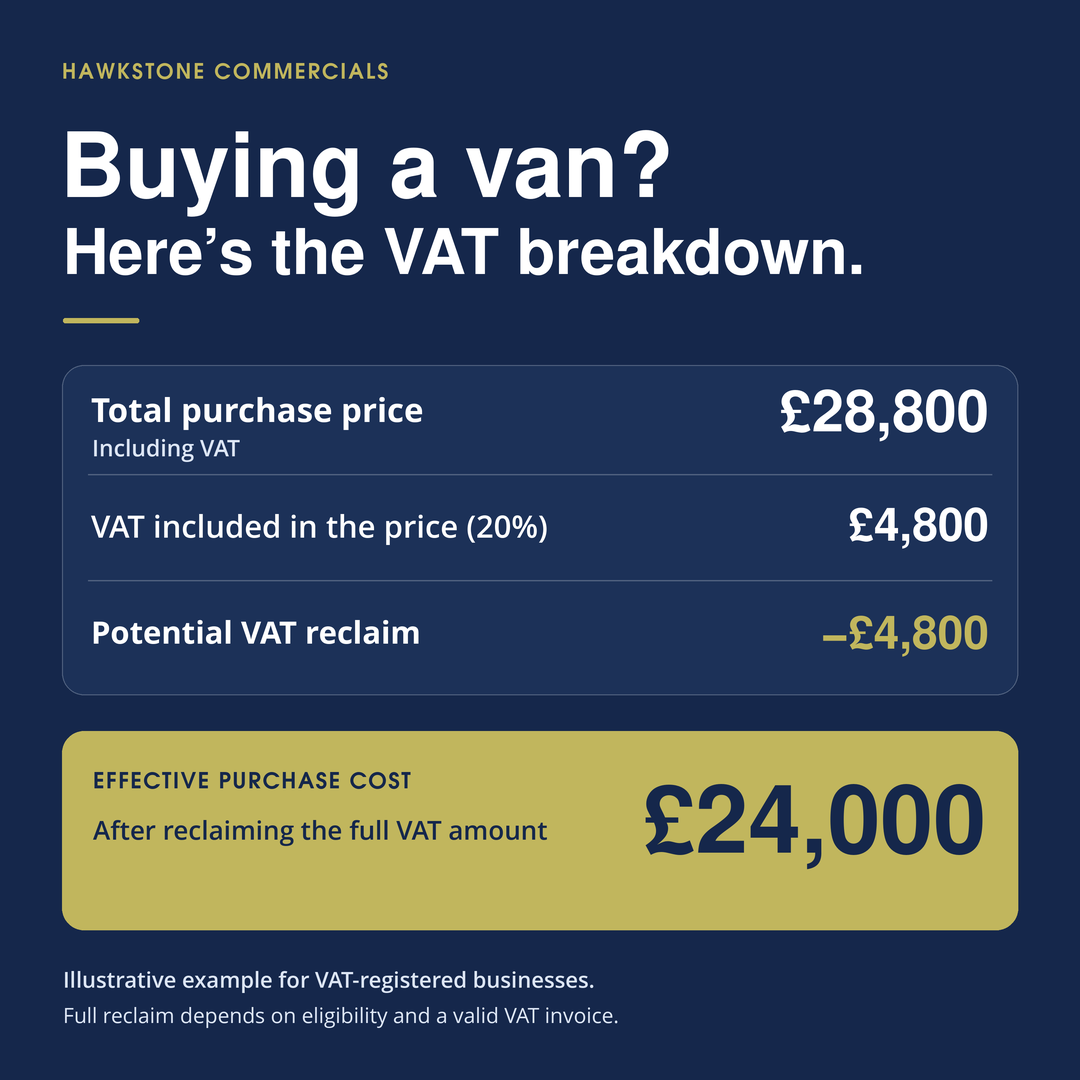
In this example, reclaiming VAT could save your business £4,800 on the cost of purchasing the van.
It's important to remember that you'll still need to pay the full purchase price initially, with the eligible VAT reclaimed through your business's VAT return.
The amount you can reclaim will depend on your circumstances, including how the vehicle is used and your VAT arrangements.
Is it easier to reclaim VAT on a new van?
Buying a new van can offer an advantage when it comes to VAT recovery.
New commercial vehicles are normally sold with VAT charged on the full purchase price, which eligible VAT-registered businesses can generally reclaim.
However, not all used vans are sold with reclaimable VAT. Some are sold under the VAT Margin Scheme, meaning buyers cannot reclaim VAT separately on the purchase.
This is worth considering when comparing new and used vans. Although a used vehicle may have a lower advertised price, the amount of VAT you can recover could make a difference to the overall cost.
Always check whether VAT is included and separately shown on the invoice before making your decision.
Who can claim VAT back on a van?
To reclaim VAT on a van, your business must be VAT-registered and the vehicle must be used for business activities that qualify for VAT recovery.
If the vehicle is also used privately, the amount recoverable may be affected. Incidental private use of an ordinary commercial van is generally treated differently from more substantial personal use.
If your business uses the VAT Flat Rate Scheme, different rules apply. However, you may still be able to reclaim VAT on a van costing £2,000 or more, including VAT, provided it meets HMRC's requirements.
How do you claim VAT back on a van?
The process generally involves:
1. Confirming that your business and vehicle purchase qualify for VAT recovery.
2. Obtaining and retaining a valid VAT invoice showing the VAT charged.
3. Recording the purchase in your business accounts.
4. Including the eligible VAT amount in your VAT return.
If you lease or finance your van, the VAT treatment may differ depending on the agreement, so it's worth checking before making a decision.
How different finance options affect VAT
If you're buying a van through finance or leasing, the way you reclaim VAT depends on your agreement.
With Hire Purchase, eligible businesses can usually reclaim the VAT on the full vehicle price at the start of the agreement. With Finance Lease or Contract Hire, VAT is generally reclaimed gradually as rental payments become due.
Different rules apply to businesses using the VAT Flat Rate Scheme, so it's worth checking with your accountant before choosing an agreement.
For more information, visit HMRC's guidance on reclaiming VAT.
2. Make the Most of Available Tax Relief
As well as potentially reclaiming VAT, your business may qualify for tax relief on the cost of purchasing a commercial vehicle.
This means that buying a van could reduce the amount of tax your business needs to pay.
How much could you save?
Let's say your limited company purchases a new van for £24,000 excluding VAT.
Your company has £45,000 in taxable profits before claiming tax relief on the van.
If the purchase qualifies for the Annual Investment Allowance, the calculation could look like this:
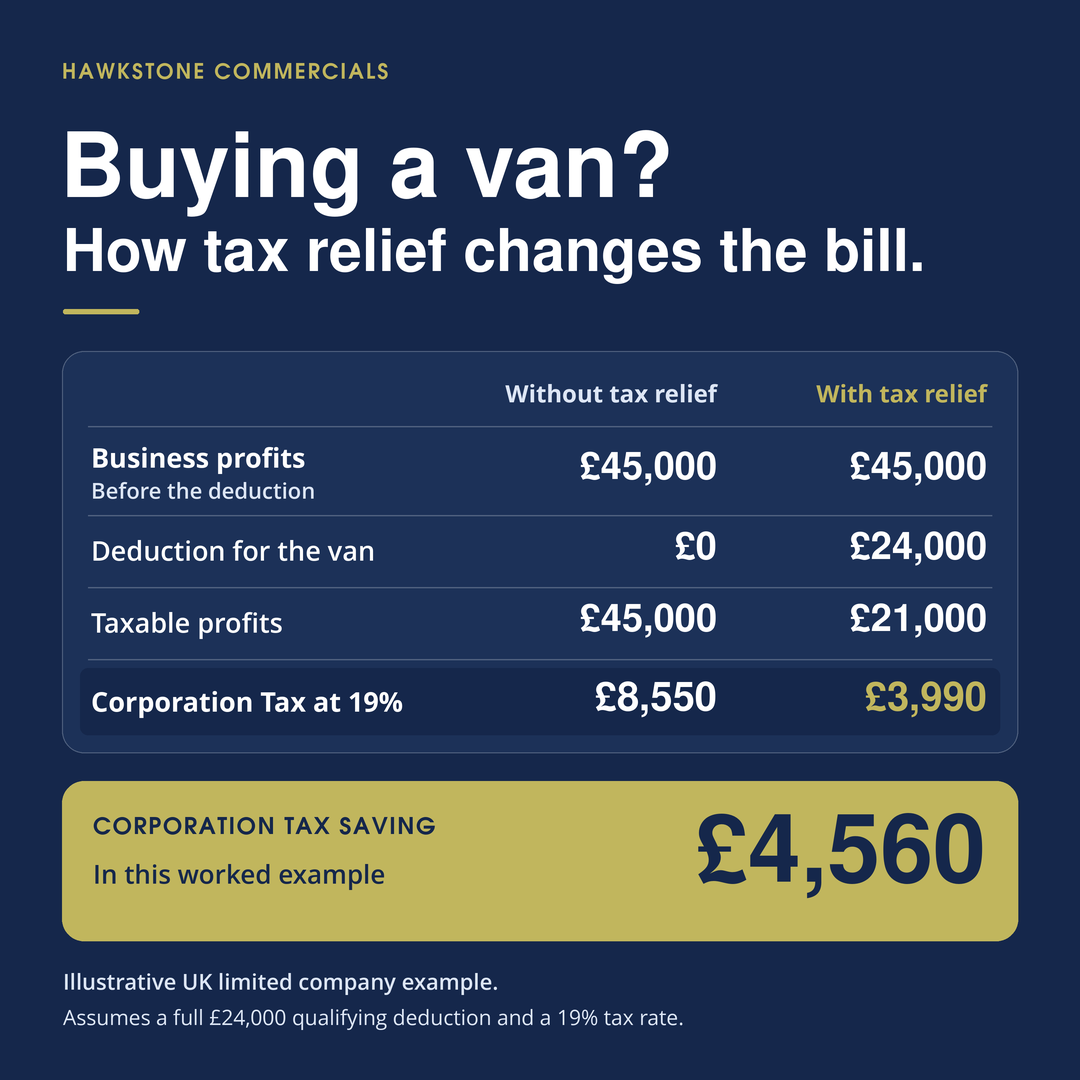
This is a simplified example assuming the company qualifies for the 19% Corporation Tax rate, can claim the full allowance and has sufficient taxable profits. The saving is a reduction in tax owed, not a refund of the van's purchase price.
Combined with the potential VAT reclaim discussed earlier, this demonstrates how understanding the available tax benefits can make purchasing a new business van more affordable.
However, the rules depend on how your business is structured, how you keep your accounts and whether the vehicle is purchased outright or financed.
If you're self-employed, you may also be able to claim tax relief on qualifying van purchases, although the rules and savings will depend on your circumstances.
Before purchasing a new van, it's worth speaking to your accountant to understand which tax reliefs are available and how to make the most of them.
3. Choose a Finance Arrangement That Suits Your Business
Buying a van outright isn't always the most suitable option, particularly if doing so would leave your business with limited funds for other expenses.
Financing your vehicle can help spread the cost over an agreed period, making monthly expenditure easier to plan.
Different arrangements offer different advantages.
For example, Hire Purchase may suit businesses that want to own their vehicle eventually, while Finance Lease or Contract Hire may appeal to those who prefer different payment structures or replace their vans regularly.
When comparing finance options, don't focus solely on the monthly payment. Consider the deposit or initial rental, interest or other charges, total amount payable and any end-of-agreement costs.
A lower monthly payment doesn't always mean a lower overall cost.
At Hawkstone Commercials, we offer a range of finance options to suit different business requirements. You can find out more in our guide to commercial vehicle finance.
4. Reduce Your Fuel Costs
Fuel is one of the largest ongoing expenses for many van owners, especially those covering significant distances each week.
Even small improvements in fuel efficiency can produce worthwhile savings over the course of a year.
A few simple habits can help:
- Check your tyre pressures regularly. Underinflated tyres increase rolling resistance, making your engine work harder.
- Avoid harsh acceleration and braking. Smoother driving can improve fuel economy and reduce wear on components.
- Remove unnecessary weight. Avoid carrying tools, materials and equipment you don't need.
- Plan your journeys. Combining deliveries or appointments can reduce unnecessary mileage.
- Avoid excessive idling. Leaving your engine running unnecessarily wastes fuel.
- Remove unused roof equipment. Roof racks and other accessories can increase wind resistance.
If your business operates several vehicles, monitoring fuel consumption can also help identify opportunities to reduce costs.
5. Keep Up with Regular Servicing and Maintenance
Putting off servicing may save money in the short term, but it could lead to more expensive problems later.
Regular maintenance helps identify wear and developing faults before they result in major repairs.
Following the manufacturer's recommended servicing schedule can also support vehicle reliability and help you meet any applicable warranty conditions.
Pay particular attention to tyres, brakes, fluid levels and warning lights. Addressing minor issues promptly may prevent more costly problems.
It's also worth keeping a record of all servicing and repairs. A complete service history could make your vehicle more attractive to buyers when you're ready to replace it.
6. Review Your Insurance and Vehicle Security
Van insurance can be expensive, particularly for vehicles used to transport valuable tools or equipment.
However, there may be opportunities to reduce your premiums without compromising the cover your business needs.
Rather than automatically renewing your existing policy, compare quotations and review your level of cover.
Consider whether your annual mileage estimate is accurate, whether the drivers listed on your policy are up to date and whether your voluntary excess remains appropriate.
Vehicle security is another important consideration. Additional locks, alarms, immobilisers and secure parking arrangements can help reduce the risk of theft. Some insurers may also offer more favourable terms for vehicles with approved security measures.
If you regularly carry expensive equipment, make sure your insurance provides appropriate protection for your tools as well as your vehicle.
Choosing the cheapest policy isn't always the best decision. The aim should be to find suitable protection at a competitive price.
7. Minimise Vehicle Downtime
For many businesses, a van isn't simply a way of getting from one place to another. It's essential to earning a living.
When your vehicle is unavailable because of a breakdown or unexpected repairs, the financial impact can extend well beyond the repair bill.
You may need to rearrange appointments, delay deliveries, hire a replacement vehicle or turn down work.
For a self-employed tradesperson, even a few days without a reliable van can be particularly disruptive.
Preventative maintenance is one way to reduce this risk, but it's also worth considering reliability and warranty cover when purchasing a vehicle.
If your current van is spending increasingly long periods off the road, consider whether continuing to repair it remains the most economical choice.
Sometimes, replacing an ageing vehicle can make better financial sense than paying for repeated repairs and lost working time.
8. Protect Your Van's Resale Value
The value of your van when you eventually sell or part-exchange it is another important part of its overall ownership cost.
A vehicle that has been well looked after will generally be more appealing to potential buyers than one showing signs of neglect.
To help maintain its value, consider the following:
- Keep a complete service and maintenance history.
- Address minor damage before it gets worse.
- Protect the interior and loading area from unnecessary wear.
- Keep the vehicle clean and presentable.
- Retain spare keys, manuals and relevant documentation.
It's also worth thinking carefully about how long you intend to keep your van.
While replacing vehicles too frequently can result in unnecessary depreciation, keeping an unreliable van for too long may create larger repair bills and greater disruption.
Reviewing the value and condition of your vehicle regularly can help you decide when the time is right to change.
9. Use Fleet Management Software to Keep Costs Under Control
If your business operates several vans, fleet management software can help you monitor expenses, improve efficiency and stay on top of vehicle maintenance.
Depending on the system you choose, it can help you:
- Monitor fuel costs: Track fuel consumption and identify vehicles that are costing more to run.
- Stay on top of maintenance: Receive reminders for servicing, MOTs and other important vehicle checks.
- Plan more efficient routes: Reduce unnecessary mileage and time spent travelling between jobs.
- Reduce vehicle downtime: Identify potential maintenance issues early and plan repairs around your business activities.
- Track running costs: Keep records of servicing, repairs, insurance and other expenses in one place.
Some systems also include vehicle tracking, allowing businesses to see where their vans are and plan work more efficiently.
Although fleet management software comes at a cost, the potential savings in fuel, maintenance and administration could make it a worthwhile investment.
For smaller businesses operating just one or two vans, a simple spreadsheet or maintenance reminder app may be sufficient.
The Bottom Line: Small Savings Can Make a Big Difference
Reducing the cost of owning a business van doesn't necessarily require major changes.
Simple steps such as maintaining your vehicle, improving fuel efficiency, reviewing your insurance and protecting its resale value can all contribute to lower running costs.
It's also worth understanding the tax relief and VAT recovery options available to your business, as these can have a significant effect on the overall cost of purchasing a vehicle.
Most importantly, consider the total cost of ownership, not just the initial purchase price or monthly finance payment.
A van that suits your working requirements, offers dependable performance and is affordable to maintain can represent better long-term value than one chosen purely because it's cheaper to buy.
Looking for a New Business Van?
At Hawkstone Commercials, we help businesses find commercial vehicles that suit requirements and budgets.
Whether you're replacing an existing van or adding another vehicle to your business, our team can help you explore available stock and suitable finance options.
Explore our current range of vans for sale or get in touch to discuss what you're looking for.
Please note: Information about VAT and tax relief is provided as general guidance and does not constitute tax or financial advice. Eligibility depends on your individual circumstances and current HMRC rules. Speak to a qualified accountant or tax adviser before making decisions about tax claims or vehicle purchases.
